Much has been said about the inevitable disasters associated with the use of AVA handlebar stems. These comments are correct - to a point - but they generally overlook two important pieces of data:
A. Not all AVA stems are prone to cracking,
and
B. ATAX stems can be just as hazardous as some AVA designs.
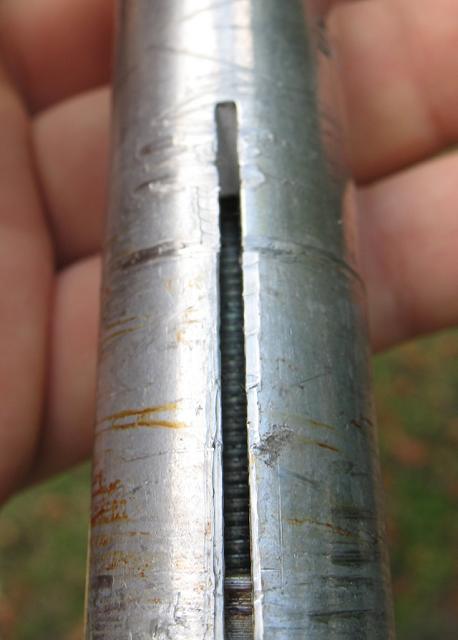
First, AVA stems: The main design fault with AVA's stems of the mid-1970s had to do with a lack of
stress relieving on the expander slot, along with an insufficient amount
of aluminum in the casting in this same area. As a result, the aluminum would crack at one of the sharp, 90-degree corners, gradually working its way around the stem until one - or both - of the ends would separate entirely.
This problem was made worse by the fact that AVA used
two slots - 180 degrees to each other - allowing expander to spread the ends wider than on a single-slotted stem.
The quality of the aluminum was still equally a problem, as failures higher up the stem are also common. Given time and a loose
expander wedge, the split seen here at left could become the down payment on your dentist's new Lexus.
A wise rider - conscious of the jiggle in his or her handlebars - would remove these bars for inspection, thereby locating the damage. However, some mechanics might simply tighten the
binder bolt without inspection; not realizing the cause of the jiggle is due to the crack, and not a loose wedge.
Though tightening the binder bolt would temporarily jam the split stem
back together - resulting in the
perception that the stem is in one piece - the combination would remain extremely hazardous (not to mention unknown).
-Mechanic's note: When have you seen a wedge loosen all by itself, without the aid of some sort of physical equipment failure? Never. If a stem bolt loosens itself, something is stripped or broken.
This phenomenon is not to be confused with over-greased stems that slip inside the steerer tube, or the improper combination of a stem quill diameter that is not the same as a given steerer tube inner diameter.
This later AVA from the 1980's has a graduated slot instead of a relief hole. It's still somewhat prone to failure, but not as much as the earlier design - particularly as it has a
single slot.
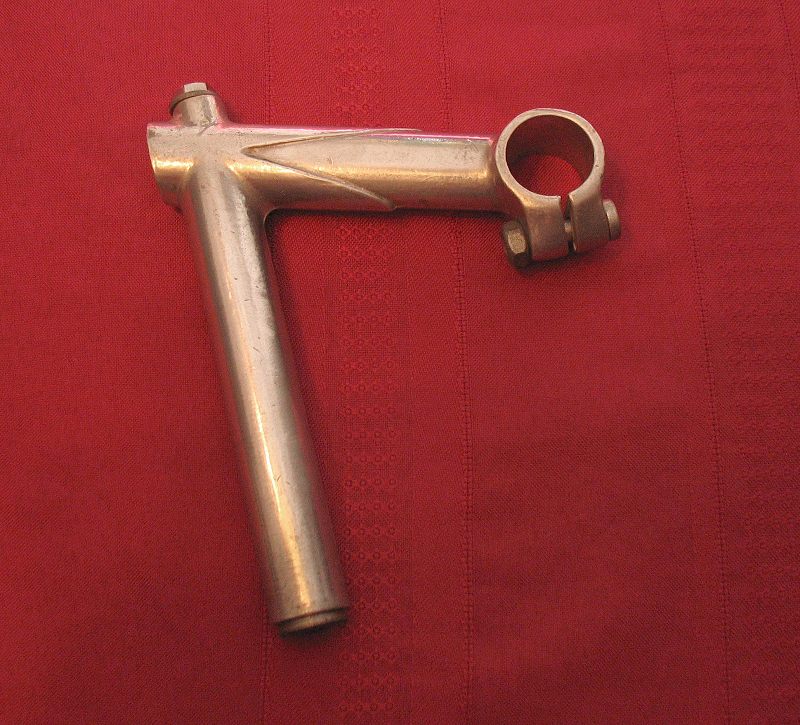
Ironically enough, the AVA stem example that Sheldon Brown uses
frequently on his website is a 1950's-era AVA spearpoint stem, which -
though similar in appearance to the 1970's units - are superior in
quality, with better aluminum and a single slot. Though they do not have a relief hole, the single slot and better quality forging generally prevents these examples from giving excess trouble:
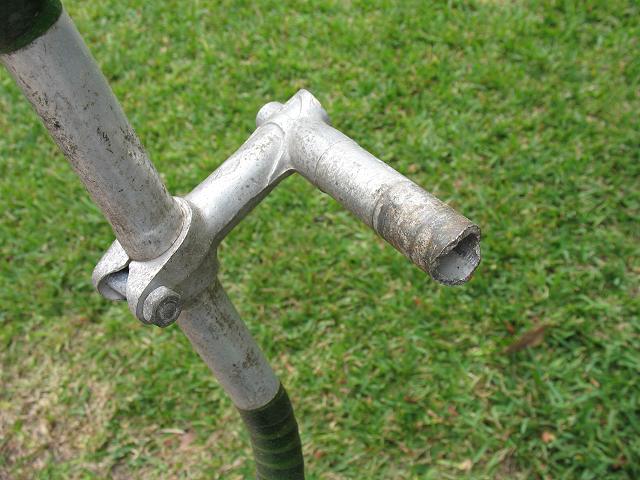
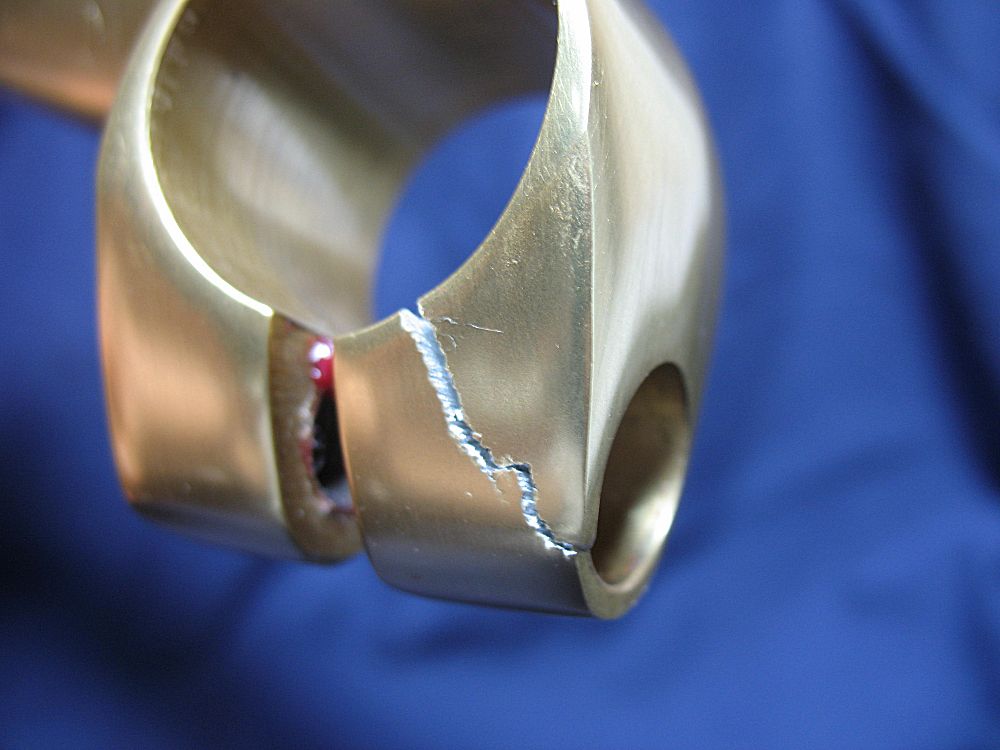
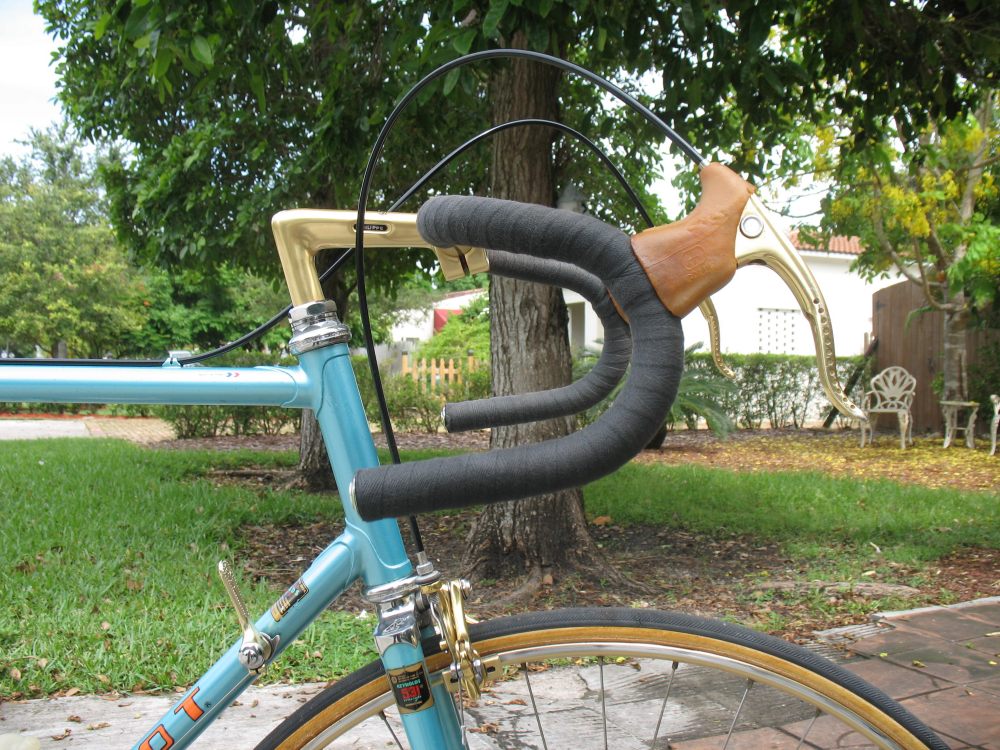
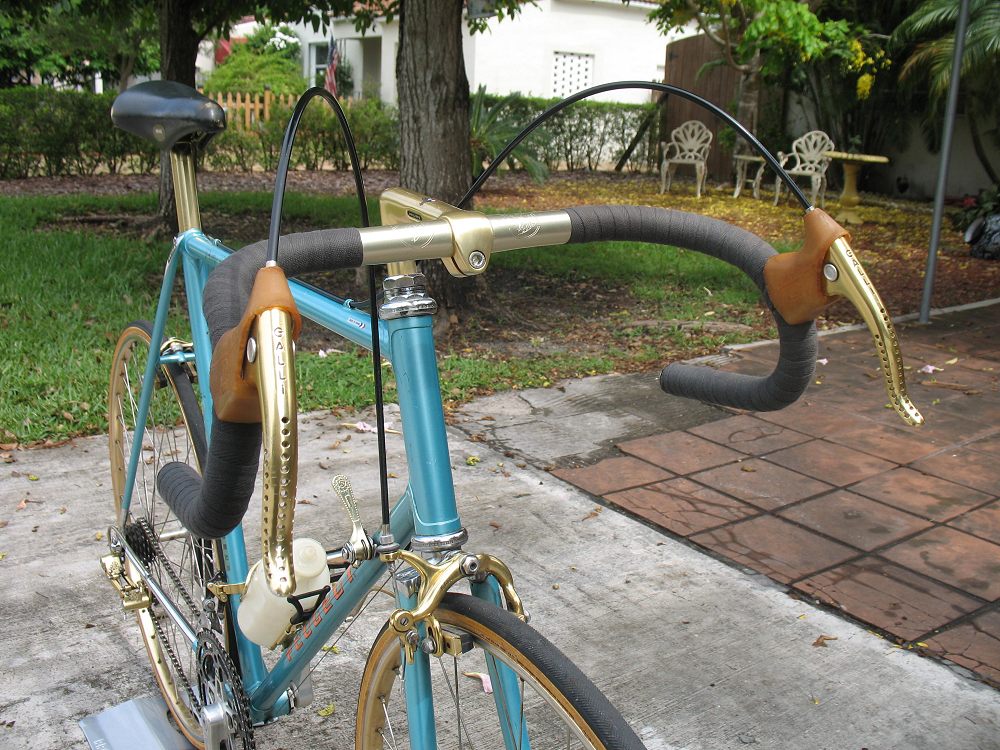
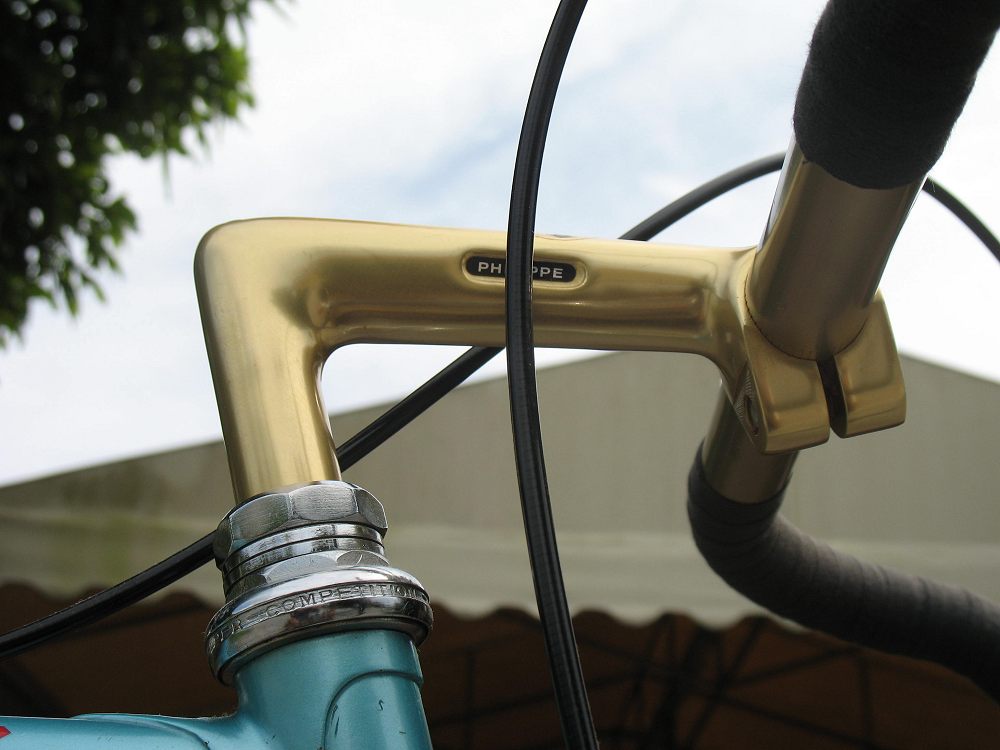
Now we come to part B of our study - the overlooked Guidons Philippe/ATAX stems. ATAX stems are not immune to failure - in fact, the top-end versions can be quite prone to severe cracking problems:
The above stem happened to be one of my own, which led me to an interesting conversation with Andrew Musi of
Yellow Jersey, who shared a very interesting insight about his experiences with the ATAX stems:
"We once had a shoe store X-ray machine here and I can tell you those stems were cast badly with voids more often than not.
Many failures with injuries."

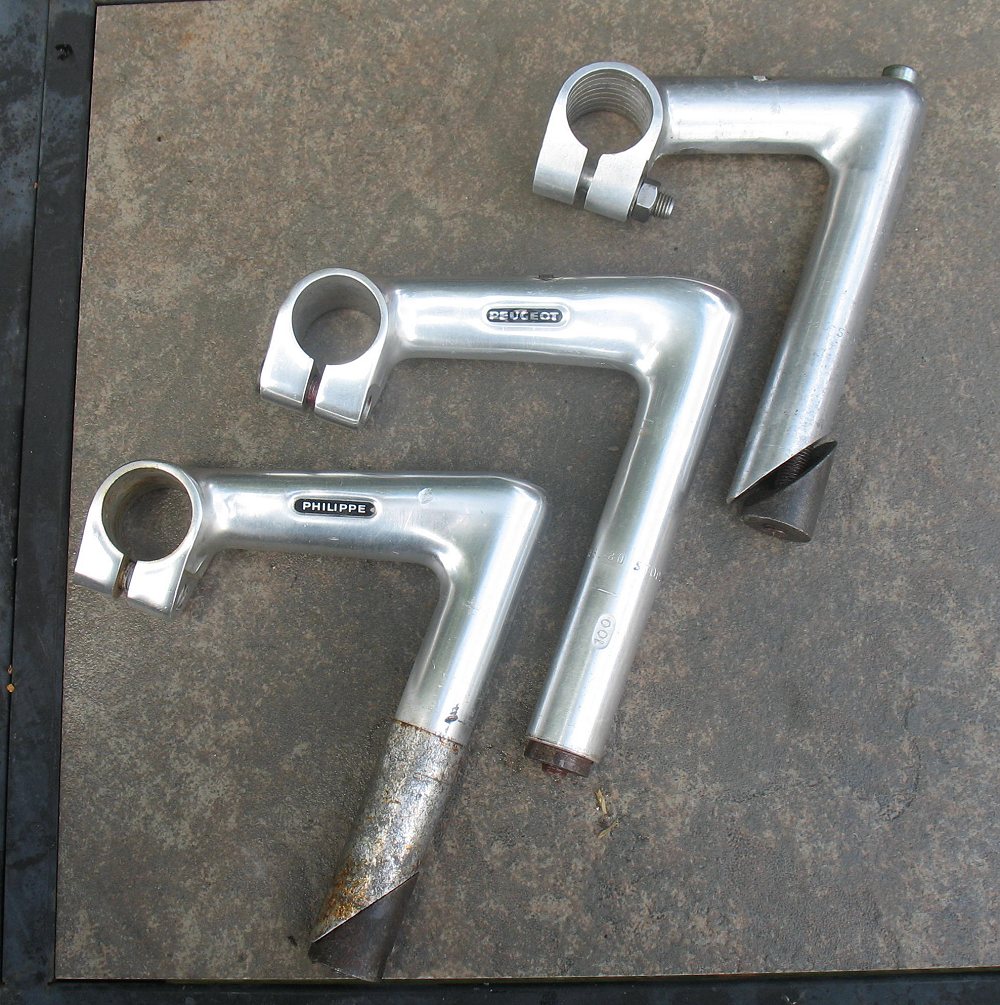
Though the later low-end Peugeots came with ATAX stems as
well, the cheaper examples were cast to be a bit
more robust, even if not as pretty (see top stem in photo at left). Also
note that the later stems also changed to wedge type from the cone
expander.
I hope this gives a bit of insight and clears up some of the misconceptions relating to the AVA "death stem" and similar ATAX models.